
Barkaas Arabic Restaurant, Park Street Area, Kolkata
Even service styles are evolving to match this demand. But beyond that, it’s about the vibe, the energy, the way the staff interact.” This realization led him to rethink dining formats entirely.” One misstep can damage brand reputation, making re-entry difficult.
Barkaas Indo Arabic Restaurant Menu
Whether Barkaas Arabic Restaurant you’re here for a family dinner, a casual get-together, or a special celebration, Barkaas promises a delicious, unforgettable experience. Warm service is at the core of everything we do. ✅ Ambience – Our interiors are inspired by Arabic architecture and design, offering a cozy and immersive dining atmosphere. Our mission is to offer more than just a meal — we deliver a complete cultural experience with every dish we serve. At Barkaas, we take pride in serving authentic Arabian cuisine that reflects the rich culinary heritage, spices, and flavors of the Middle East. Welcome to Barkaas Arabic Restaurant, where every bite is a journey to the heart of Arabia!
- “Restaurateurs should keep an ear to their communities and lean into the emotional and sensory elements of hospitality to foster loyalty and word-of-mouth buzz,” added Busetty.
- Staffing & CultureBrands true engine for growth is the people.
- Every touchpoint—from music to plating to staff interaction—will be intentional, creating experiences guests remember long after the meal ends.
- While Frangline stressed upon creating a positive, growth-oriented work culture—through training, empowerment, and recognition helps retain talent and build stable teams, which is essential for sustainable scale.
With that context, industry leaders gathered to reflect not only on the year gone by, but more importantly, on the big shifts they are making in 2026. Notably, the sourcing of products can be based on unit economics, and not menu pricing. Brands should always pay emphasis to develop long-term partnerships with suppliers based on trust, volume, and quality. It helps to have the recipes standardized and the kitchens managed with very detailed standard operating procedures (SOPs), which minimized the need for chef-driven decision-making. The basic product offerings should be standardized early on to allow better control over quality. And this plays an important role in making services quicker and easier.
Licious Eggs
Barkaas Arabic Restaurant is known for its delicious food, friendly service, and warm atmosphere. Terrific service is something that people note in their comments. The delectable non-veg offerings and pleasant ambiance make it a must-visit for those seeking an authentic Arab dining experience. Barkaas Arabic Restaurant provides food delivery for the convenience of its customers.
- From table landscaping to projection mapping, brands are now dishing out experiential experiences for the guests to have a personalized experience.
- Barkaas Arabic Restaurant offers a wide variety of dishes, from India, Arab and China.
- With 30–40% of restaurant sales now coming through online delivery platforms, operators are walking a fine line between growth and profitability.
- Consumers are reshaping dining around personal expression and autonomy.
Barkaas- Arabic Restaurant
Founder Pawan Saluja said growth is coming less from novelty beverages and more from food-led pairings. We focus on light, European-style food with Asian and regional influences, so customers experience variety without confusion.” Yet this expansion is being accompanied by a more structural shift, driven by rising costs, changing consumption patterns and a consumer who values experience and consistency over novelty. Format specialisation, food-led growth, intentional dwell time and tighter operational discipline are now driving decisions across the category. As the cafe industry looks ahead to 2026, growth is being shaped by a set of dominant trends redefining how cafes are designed, operated and monetised. “The 2026 Food Trends Report helps us see where culture is headed and gives our brands a clearer path to creating more moments of joyful, flavorful ownership for our customers.”
“Cafes today function as informal living rooms, places where people meet, chat, work, take Zoom calls, or simply sit and observe. For many café operators, the starting point is no longer the coffee menu, but the role the space plays in a customer’s day. Drinks are small but accessible joys, with 43% of specialty beverages purchased standalone without the customer buying any food. As consumers navigate rising costs and endless choices, they are now approaching food through emotional value rather than just logic. At KFC, 71% of its top-performing menu item tests had specific sauces, reinforcing how influential customizable flavors have become.

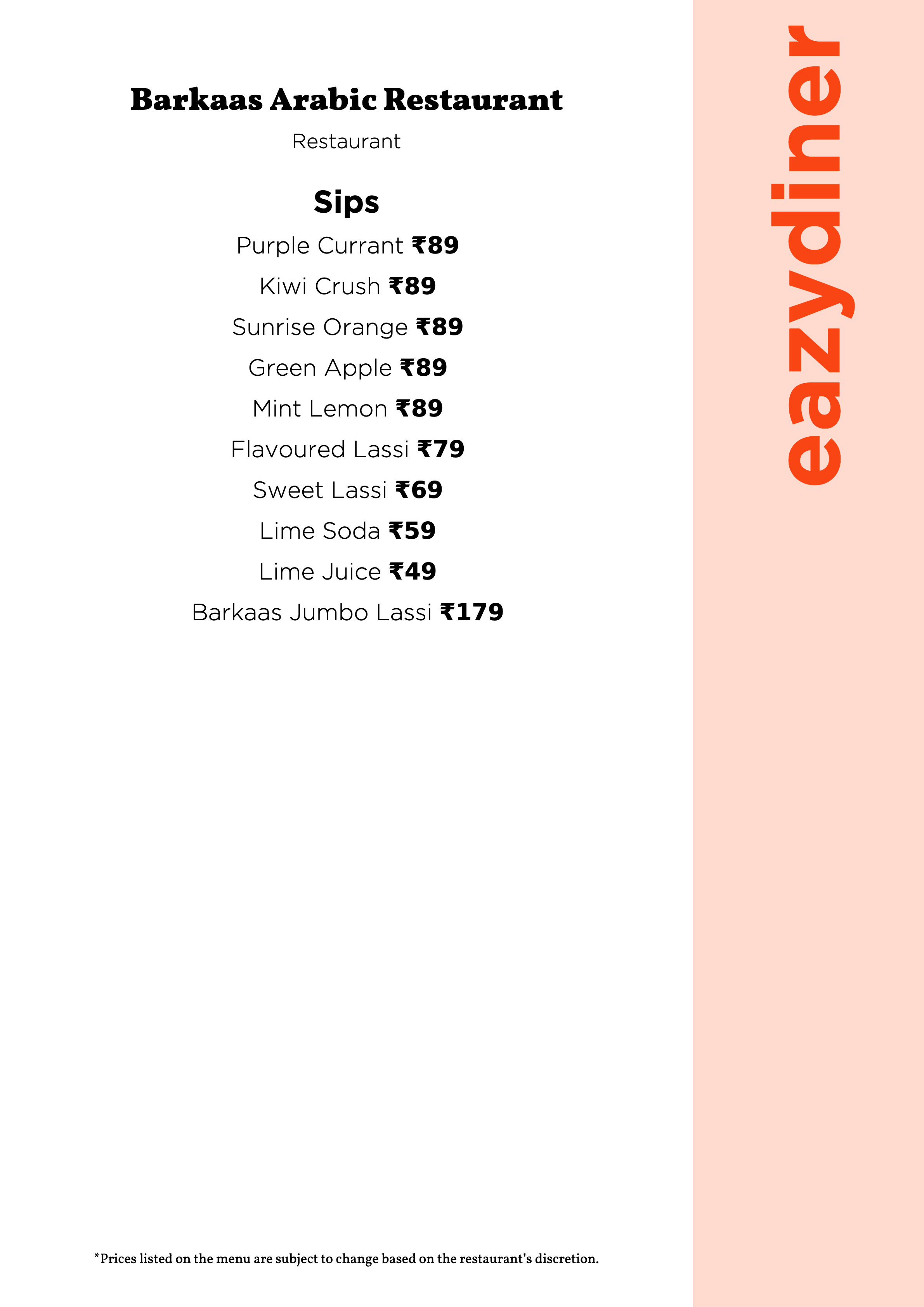
Barkaas- Arabic Restaurant Menu
Beyond global cuisines, focused formats are also helping underrepresented Indian and colonial-era cuisines find renewed relevance with urban audiences. “The biggest challenge with a cuisine-focused format is that there’s nowhere to hide. Industry benchmarks show food costs typically account for 25–35 per cent of revenue, labour another 20–30 per cent, while delivery commissions can take away up to 30 per cent of order value. From a business standpoint, cuisine-focused formats offer tangible operational advantages, particularly in an environment where margins are under pressure.
We are cutting inventory by designing menus around overlapping ingredients and versatile prep.” Modern pricing strategies like dynamic or time-based pricing help restaurants actively manage demand offering lower prices during slow periods and higher prices during peak times to maximize revenue. Reddy noted, “For guests, the experience becomes more intentional as they believe that as there are fewer options, each dish has been perfected.”
Menu Innovations & Global flavours
Recent entrants include Gordon Ramsay Street Pizza and Papa John’s, with brands like PizzaExpress entering QSR formats in Jaipur. Localisation is no longer superficial—successful brands adapt toppings, spice profiles, and even fermentation styles to suit city-level palates,” commented Moorjani. Health-conscious options, menu customization, diversification, and technology-driven operations are reshaping the pizza segment. We hold fond memories of brands we visited as children. And once brands adapt themselves to navigating operational challenges, the sky is the limit. In a market as complex as India, brands that have operational excellence not only grow faster but also last longer.
This ensured that the cost structure remained viable even as brands expanded. A sourcing model based on local procurement ensures that the food quality is not compromised. The emphasis should be on process-driven cooking versus chef-driven cooking, which was a key shift for a scalable food company. It is important that brands structure their business around the philosophy of standardization rather than individual genius. For multi-city brands – this might be a challenge but at the same time also non-negotiable.